

State of Illinois Joins LISC, Chicago Neighborhood Initiatives Launch Capital Grant Program

Lawndale News Chicago's Bilingual Newspaper - Business

Lawndale News Chicago's Bilingual Newspaper - Business

The Department of Commerce and Economic Opportunity (DCEO) joined the Local Initiatives Support Group (LISC) and Chicago Neighborhood Initiatives (CNI) in announcing the opening of applications and plans to coordinate reimbursement and capital repairs on Tuesday, October 27, as part of the Rebuild Distressed Communities (RDC) program. The new program will direct $25 million in funding to help cover the costs of civil-unrest-related repairs while also supporting new investments in economically distressed communities across Illinois. To ensure that communities facing the most acute damages are able to receive support in applying, qualifying and receiving repair work, the State of Illinois has teamed up with local organizations, LISC and CNI, to expedite the review process and ensure assistance follows the needs. Reimbursements can range from $1,000 to $200,000 depending on eligibility and the extent of damages. Additionally, LISC will host the application for the grants on its website. For more information, visit www2.illinois.gov for all eligible zip codes. To assist small businesses, community organizations, and nonprofits with navigating the application process for RDC, DCEO will team up with LISC and CNI to host a series of webinars detailing the grant opportunities, required documentation, and more. The following webinars are scheduled:

• Friday, October 30, 2020 12-1 p.m. (En Español)

• Friday, November 6, 2020 11 a.m.-12 p.m.

For more information on the application and webinar schedule visit https://www.lisc.org/chicago/regional-stories/rebuild-illinois-distressed-communities-grant/.

Elecciones 2020

Por: Ashmar Mandou

Lawndale News Chicago's Bilingual Newspaper - BusinessLas elecciones del 2020 están a unos cuantos días en Illinois y ya sea que planee hacerlo por correo, votar temprano o ir personalmente a los lugares del Día de las Elecciones el 3 de noviembre, tenemos importante información para ayudarle a hacer que su voto se escuche.


Como votar en Illinois
Hay tres formas de votar en Illinois, con los detalles a continuación:

1. Puede pedir una boleta por correo y regresarla enviándola a través de la oficina de correos o entregándola personalmente con la autoridad de elecciones de su localidad, en un lugar aprobado para hacerlo.

2. Puede votar temprano en persona, en un lugar de votación temprana en su jurisdicción, abierta desde ahora al Día de las Elecciones el 3 de noviembre.

3. El Día de las Elecciones, usted puede votar en persona en el lugar de votación dentro de su jurisdicción, que estará abierto el 3 de noviembre.

Como votar el Día de las Elecciones
Si usted prefiere depositr su boleta el Día de las Elecciones, en la mayoría de condados de Illinois solo tiene una opción: su lugar de votación designado. Si no sabe donde es, ponga su dirección en www.chicagoboardelections.gov o www.cookcountyclerk.com. Nuevo este año, todos los sitios de votación temprana permanecerán abiertos el Día de las Elecciones para todos los votantes de la ciudad, así como seis lugares en los suburbios del Condado de Cook.

¿Cuándo abren las urnas el día de las elecciones?
Las urnas abren a las 6 a.m. en todo el estado y permanecerán abiertas hasta las 7 p.m. Pero recuerde – Si no está EN LINEA cuando las urnas cierren, todavía puede votar! Así que si se le hace tarde y llega corriendo a las urnas en el último minuto, no se preocupe si ve una línea – y no deje que nadie trate de disuadirlo de depositar su boleta.

Vea quién está en su boleta en Illinois
Hay muchas carreras importantes en Illinois en estas elecciones, por lo que hemos creado un medio para ayudarle a saber quienes son sus representantes – y quien está corriendo contra ellos – antes de que usted vote. Para obtener una boleta de muestra completa, incluidas todas las contiendas locales y judiciales, así como las preguntas del referéndum, visite el sitio web de la autoridad electoral local, www.chicagoelections.gov o visitewww.cookcountyclerk.com

Lawndale News Chicago's Bilingual Newspaper - Business

Lawndale News Chicago's Bilingual Newspaper - Business

El Estado de Illinois se Une a LISC y Chicago Neighborhood Initiatives para Lanzar Programa de Subsidio de Capital

Lawndale News Chicago's Bilingual Newspaper - Business

Lawndale News Chicago's Bilingual Newspaper - Business

El Departamento de Comercio y Oportunidades Económicas (DCEO) se unió a Local Initiatives Support Group (LISC) y Chicago Neighborhood Initiatives (CNI) para anunciar la apertura de solicitudes y planes para coordinar reembolsos y reparaciones de capital, el martes, 27 de octubre, como parte del programa Rebuild Distressed Communities (RDC). El nuevo programa dirigirá $25 millones en fondos para ayudar a cubrir los costos de las reparaciones relacionadas con disturbios civiles, apoyando también nuevas inversiones en comunidades de Illinois perjudicadas económicamente. Para garantizar que las comunidades que enfrentan los daños más graves pueden recibir apoyo para solicitar, calificar y recibir trabajos de reparación, el Estado de Illinois se ha unido a organizaciones locales, LISC y CNI para agilizar el proceso de revisión y garantizar la ayuda a quienes lo necesitan. Los reembolsos pueden variar de $1,000 a $200,000 dependiendo de la elegibilidad y la extensión de los daños. Adicionalmente, LISC pondrá la solicitud de los subsidios en su red. Para más información, visitar www2.illinois.gov para todas las zonas postales elegibles. Para ayudar a las pequeñas empresas, organizaciones comunitarias y organizaciones no lucrativas con el proceso de solicitud para RDC, DCEO se unirán a LISC y CNI para ofrecer una serie de webinars detallando las oportunidades de subsidio, la documentación requerida y más. Están programados los siguientes webinars:

• Viernes, 30 de octubre, 2020 12-1 p.m. (En español)

• Viernes, 6 de noviembre, 2020 11 a.m. – 12 p.m.

Para más información sobre la solicitud y el programa del webinar, visite https://www.lisc.org/chicago/regional-stories/rebuild-illinois-distressed-communities-grant/.

State of Illinois Kicks Off Women’s Small Business Month

Lawndale News Chicago's Bilingual Newspaper - Business

Lawndale News Chicago's Bilingual Newspaper - Business

State of Illinois officials joined First Women’s Bank (in organization) to kick off Women’s Small Business Month in Illinois and to recognize the contributions of hundreds of thousands of women owned businesses in communities across the state. Working alongside the future First Women’s Bank, slated to open in early 2021, Illinois will partner on strategies to expand technical assistance and other resources to drive growth of women businesses in Illinois – which continue to lead on new business expansion, yet who remain historically underrepresented in loans. First Women’s Bank recently announced it has received conditional approval from the FDIC and continues to pass critical milestones on the way to an early 2021 launch. This includes: the selection of its flag ship location at 1308 N. Elston in Chicago (a Farpoint Property); the formation of the First Women’s Bank Advisory Board, expanding its experienced and talented female leadership by adding new members to its boards; and selecting its core technology partner, Fiserv.  According to research compiled by First Women’s Bank, the number of women-owned businesses in the U.S. has grown rapidly—twice as fast as the national average last year and up over 114 percent over the past 20 years. This exponential growth has been driven, in large part, by women of color. Of the approximately 12.9 million businesses owned by women in this country, 50 percent are owned by women of color. For more information on First Women’s Bank and updates on their programs and resources, visit their website at https://www.firstwomensbank.com/

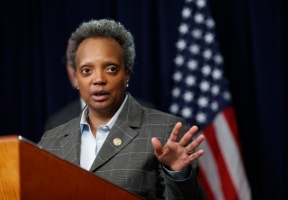
HUD Confirms Investigation of Environmental Racism Complaint Against Mayor Lightfoot, Ald. Sadlowski-Garza and Hopkins, and City Council

Lawndale News Chicago's Bilingual Newspaper - Business

Lawndale News Chicago's Bilingual Newspaper - Business

Officials from the U.S. Department of Housing and Urban Development (HUD) confirmed that the agency is formally investigating claims of discriminatory zoning and land use policies and practices claimed by environmental justice organizations against the City of Chicago. The investigation comes in response to a civil rights complaint submitted to HUD in August by Southeast Side community organizations that accused city officials of environmental racism. 

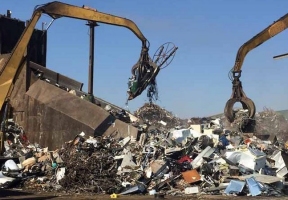
The groups filing the complaint — Southeast Environmental Task Force, Southeast Side Coalition to Ban Petcoke, and People for Community Recovery — pointed to the city’s role in facilitating the proposed relocation of the industrial recycler, General Iron, to the Southeast Side as well as decades of industrial land use policies that have entrenched housing segregation and discrimination against communities of color. 

HUD has formally served its complaint on the named respondents, including Mayor Lightfoot, Alderwoman Sadlowski-Garza, Alderman Hopkins and the Chicago City Council, initiating its 100-day investigation period. Community leaders have expressed hope that the elected representatives and local agencies will directly engage in open and transparent discussions on how the city can dismantle environmentally racist policies.

City officials recently approved a key permit necessary for the relocation of General Iron to the Southeast Side without informing the community or giving residents any opportunity to comment. The City has also informed members of the organizations bringing the complaint that the Department of Public Health will stop bi-monthly meetings with residents that began several years ago to address environmental justice issues on the Southeast Side. 

The investigation also comes as some members of City Council hold up a recent zoning amendment proposed by the Mayor’s office that would increase review of new and expanding industrial uses because they think it goes too far, further raising concerns that city officials are continuing in their long-term pattern of discriminatory land use practices and underscoring the need for a HUD investigation. 

Preckwinkle, Housing Authority Announce Opening Housing Choice Voucher Program Waitlist

Lawndale News Chicago's Bilingual Newspaper - Business

Lawndale News Chicago's Bilingual Newspaper - Business

The Housing Authority of Cook County (HACC) announced it will accept applications for its Housing Choice Voucher (HCV) Program waitlist for the first time since 2001. Formerly known as Section 8, the HCV Program provides subsidies to income-eligible households to assist with rental payments in the private rental market. HACC currently provides assistance to more than 15,000 voucher-holders with funding provided by the Department of Housing and Urban Development (HUD). HACC will accept applications for the waitlist through November 2. In the Chicago metro area, the income eligibility threshold ranges from $31,850 for a single individual to $60,100 for a household of eight. The HACC waitlist will have 10,000 spots for new applicants. Only one application per household will be accepted. The application will be available online only at http://myportal.thehacc.org until 4:30pm on November 2. Paper applications will not be accepted. The application will be available in English, Spanish, Russian, Polish, Arabic, Hindi, Korean and Chinese. Applicants who need a reasonable accommodation or assistance in filling out an application can contact the HACC by phone at (312) 517-2388 or at HCVWaitlist2020@thehacc.org.

El Estado de Illinois Inicia el Mes de la Pequeña Empresa para Mujeres

Lawndale News Chicago's Bilingual Newspaper - Business

Lawndale News Chicago's Bilingual Newspaper - Business

Funcionarios del Etado de Illinois se unieron a First Women’s Bank (en organización) para el lanzamiento del Mes de la Pequeña Empresa para Mujeres en Illinois y reconocer las contribuciones de cientos de miles de mujeres propietarias de negocios en comunidades de todo el estado. Trabajando junto con el futuro First Women’s Bank, programado para abrir a principios de 2021, Illinois de asociará en estrategias para ampliar asistencia técnica y otros recursos para mejorar el crecimiento de las empresas de mujeres en Illinois – que continúan liderando la expansión de nuevos negocios, pero que históricamente permanecen sub-representados en préstamos. First Women’s Bank anunció recientemente haber recibido la aprobación condicional de FDIC y continúa superando hitos críticos en el camino hacia un lanzamiento a principios de 2021. Esto incluye su ubicación en el 1308 N. Elston en Chicago (propiedad de Fairpoint); La formación de la Primera Junta de Asesoría de First Women’s Bank, amplía su liderazgo femenino experimentado y talentoso, agregando nuevos miembros a sus juntas; y seleccionando su principal socio tecnológico, Fiserv. De acuerdo a investigaciones recopiladas por First Women’s Bank, el número de empresas de mujeres en E.U. ha crecido rápidamente – el doble, tan rápidamente como el promedio nacional el año pasado y sobre 114 por ciento en los últimos 20 años. Este crecimiento exponencial ha sido impulsado, en gran parte, por mujeres de color. De los aproximadamente 12.9 millones de negocios propiedad de mujeres en este país, el 50 por ciento son propiedad de mujeres de color. Para más información sobre First Women’s Bank y actualizaciones sobre sus programas y recursos, visite su red en https://www.firstwomensbank.com/

HUD Confirma la Investigación de la Denuncia de Racismo Ambiental Contra la Alcaldesa Lightfoot, Ald. Sadlowski-Garza y Hopkins, y el Ayuntamiento

Lawndale News Chicago's Bilingual Newspaper - Business

Lawndale News Chicago's Bilingual Newspaper - Business

Oficiales del Departamento de Vivienda y Desarrollo Urbano de E.U. (HUD) confirmaron que la agencia está formalmente investigando reclamos de zonas y terrenos discriminatorios y políticas y prácticas de zonificación y uso de la tierra reclamadas por organizaciones de justicia ambiental contra la Ciudad de Chicago. La investigación es en respuesta a una queja de derechos civiles sometida a HUD en agosto por organizaciones comunitarias del sector sur que acusan a funcionarios de la ciudad de racismo ambiental.

Los grupos registrando la queja – Southeast Environmental Task Force, Southeast Side Coalition to Ban Petcoke y People for Community Recovery – señalaron el papel de la ciudad al facilitar la propuesta reubicación del reciclador industrial, General Iron, al sector sudoeste, así como décadas de terrenos y décadas de políticas industriales de uso de la tierra que han arraigado la segregación y discriminación de viviendas contra las comunidades de color.

HUD ha notificado formalmente su queja a los encuestados nombrados, incluyendo a la Alcaldes Lightfoot, a la Concejal Sadlowski-Garza, al Concejal Hopkins y al Concilio de la Ciudad de Chicago, iniciando su período de investigación de 100 días. Líderes comunitarios han expresado la esperanza de que los representantes electos y las agencias locales participarán directamente en debates abiertos y transparentes sobre cómo la ciudad puede desmantelar las políticas ambientalmente racistas.

Los funcionarios de la ciudad aprobaron recientemente un permiso clave necesario para la reubicación de General Iron al sector sudoeste, sin informar a la comunidad o dar a los residentes la oportunidad de comentar. La Ciudad ha informado también a los miembros de la organización que llevaron la queja, que el Departamento de Salud Pública detendrá sus reuniones bimestrales con los residentes, que comenzaron varios años atrás, para atender problemas de justicia ambiental en el sector sudeste.

La investigación también se produce cuando algunos miembros del Concejo Municipal retrasan una reciente enmienda de zonificación propuesta por la oficina de la Alcaldesa, que aumentaría la revisión de los usos industriales nuevos y en expansión, porque creen que va demasiado lejos, lo que aumenta la preocupación de que los funcionarios de la ciudad continúan con su patrón de términos de prácticas discriminatorias de uso de la tierra y subrayando la necesidad de una investigación de HUD.

Preckwinkle y la Autoridad de la Vivienda Anuncian la Apertura de la Lista de Espera del Programa de Vales de Elección de Vivienda

Lawndale News Chicago's Bilingual Newspaper - Business

Lawndale News Chicago's Bilingual Newspaper - Business

Housing Authority of Cook County (HACC) anunció que aceptará solicitudes para la lista de espera del programa Housing Choice Voucher (HCV) por primera vez desde el 2001. Anteriormente conocida como la Sección 8, el Programa HCV provee subsidios a viviendas de ingreso elegible para ayudarlos con el pago de la renta en el mercado de rentas privado. HACC actualmente brinda asistencia a más de 15,000 titulares de vales con fondos provistos por el Departamento de la Vivienda y Desarrollo Urbano (HUD). HACC aceptará solicitudes para la lista de espera hasta el 2 de noviembre. En el área metropolitana de Chicago, el umbral de elegibilidad de ingresos varía entre $31,850 para una persona sola a $60,100 para una familia de ocho. La lista de HACC tendrá 10,000 lugares para nuevos solicitantes. Solo se aceptará una solicitud por familia. La solicitud estará disponible en línea solo en http://myportal.thehacc.org hasta las 4:30 del 2 de noviembre. No se aceptarán solicitudes en papel. La solicitud estará disponible en inglés, español, ruso, polaco, árabe, hindi, coreano y chino. Los solicitantes que necesiten una adaptación razonable o asistencia para completar una solicitud pueden comunicarse con HACC por teléfono al (312) 517-2388 o en HCVWaitlist2020@thehacc.org.

SEIU Illinois State Council Joins Climate Jobs Illinois Coalition

Lawndale News Chicago's Bilingual Newspaper - Business

Lawndale News Chicago's Bilingual Newspaper - Business

The SEIU Illinois State Council, representing 150,000 janitors, healthcare workers, public employees and more across the state, announced it will join the Climate Jobs Illinois Coalition to advocate for an ambitious clean energy transition built by union labor. The progressive labor council is the latest of many to endorse the coalition’s mission, which will create good union jobs in the clean energy sector to lower the state’s high unemployment rate, reduce emissions and help close the growing income inequality gap in disadvantaged communities.

“Essential workers are on the front lines of the COVID-19 pandemic, but many return home after their shifts to neighborhoods with heavy pollution that negatively impacts the health of their families,” said SEIU Illinois State Council President Tom Balanoff. “Working people are ready to fight for a clean energy economy that will reduce emissions and provide a path to the middle class with good union jobs.”

“Essential workers of color disproportionately impacted by the COVID-19 pandemic also face the greatest impact of the climate crisis,” said SEIU Illinois State Council Vice President Greg Kelley. “This coalition will be fundamental to ensuring our children and future generations can thrive with a clean environment.”

With 600,000 jobs lost during the COVID-19 crisis thus far, Climate Jobs Illinois is working to create new jobs which create more pathways to the middle class, especially for communities disproportionately impacted by the COVID-19 pandemic and climate change. The SEIU Illinois State Council joins a growing coalition of labor groups and allies, and the initiative already has bipartisan support from across the state, including U.S. Rep. Jesús “Chuy” García (IL-04), State Sen. Sue Rezin (R-Morris), State Sen. Dave Koehler (D-Peoria), State Rep. Marcus Evans Jr. (D-Chicago) and more.