

Access and Affordability Limiting Equitable College Enrollment, Achievement in Chicago Region

Lawndale News Chicago's Bilingual Newspaper - Education

Lawndale News Chicago's Bilingual Newspaper - Education

College enrollment and completion in the Chicago area is being limited by access and cost issues tied to race, family wealth and income, and the availability of financial aid, according to a new report released today by the Partnership for College Completion (PCC). The report, College-Going and Completion in the Chicago Area: A Regional Analysis, breaks ground in examining enrollment, attainment, and completion in the seven-county metropolitan Chicago area, using a number of sources including a unique regional analysis of data from financial aid applicants. The report finds that despite a diverse pool of more than 70,000 college-going applicants from this region every year, more than 40 percent of whom are Black or Latino, the local four-year public universities together produced only 2,600 degrees for students of color in 2017. PCC urges administrators, educators and policymakers to prioritize higher education access and affordability with a concentration on equity to ensure the future prosperity of the region and state.

College-Going and Completion in the Chicago Area focuses on the students from and attending college in the Midwest’s hub of economic opportunity, where two decades of state disinvestment in students and institutions has affected the seven-county region’s 54 public and private nonprofit two- and four-year colleges and the 319,000 undergraduate students they enroll. As a result, the report finds high prices for four-year colleges and declining numbers of students attending college in the region or deciding not to pursue higher education at all, together underscoring the challenge of wide access to high-quality postsecondary opportunities. The report proposes bold equity-focused policy ideas that include: revising college admissions standards to increase the weight of GPA over ACT/SAT test scores, which disadvantage low-income students and students of color; restoring full funding of the Monetary Award Program (MAP), which provides grants to low-income students and now covers only two-thirds of the cost of attendance at community colleges and one-third of the cost at public universities for less than half of eligible students; and, stopping the flow of state aid to for-profit colleges.


Students, Teachers Speak Out for Adult Education

Lawndale News Chicago's Bilingual Newspaper - Education

Lawndale News Chicago's Bilingual Newspaper - Education

By: Ashmar Mandou

Surmounting disappointment over the changes in the Adult Education Program at Chicago City Colleges (CCC), has caused AFSCME 3506, the union that represents teachers and coordinators at CCC, to organize a news conference announcing the distress the CCC administration is trying to impose.

“After 33 years of service I am appalled to see the day a Latino Chancellor would come and make our program the Walmart Education Model.  After three years of struggling to get a fair contract we have finally reached an understanding,” said Sonia Flores, an AFSCME member. “Unfortunately, we have been misled and backstabbed. The teachers and students from The North and South side, in particular in Pilsen, Little Village and the Southwest sides of Chicago are going to be faced with the dilemma of a new schedule that will become a struggle for them, their families and their loved ones.” Adult Education is the biggest program in Illinois that provides opportunities to generations of immigrants and working-class Chicagoans across the city with free classes in English as a Second Language and GED high school equivalency. 

According to members of AFSCME 3506 they are concerned about the impact of cutting instructional hours for CCC’s most vulnerable students as it may limit student choices and deny educational access for people trying to improve their lives.  AFSCME 3506 has stated that the changes do not meet the standards of sustainable educational practice and CCC wants to see an increase in standardized test scores for the Adult Education Program but the reduction in instructional hours will make this goal more difficult for the students to achieve.  CCC recently bought new textbooks to support the new Adult Education curriculum and raise standardized test scores.  Yet, teachers are struggling to find methods to cover an entire textbook with less classroom contact hours. 

“Chancellor Juan Salgado assigned focus groups through the CCC colleges and community groups to develop round tables to provide feedback on how to improve classes.  I was invited to a group meeting by community relations person and later uninvited,” said Flores. “Chancellor, you are cheapening our program and dismissing academic rigor and inclusion. Since your arrival the program’s pillars have been unstable because you have fired all the core central office staff and you have appointed vice chancellors with zero education experience, zero teaching experience, and zero adult education background.” AFSCME 3506 members were astonished when these sweeping changes were announced, just days after the union voted to accept the proposed Adult Education contract from CCC.  This could amount to many teachers getting a 25 percent reduction in their paid hours.  In addition, teachers who lose hours are in jeopardy of being ineligible for the CCC health insurance plan and other benefits. AFSCME 3506 is recommending that Chicago City Colleges takes the time to go through a comprehensive process to best develop an Adult Education Program that solicits the input of all the stakeholders: from students to educators to management and funders.

CTU Responds to District Contract Proposals

Lawndale News Chicago's Bilingual Newspaper - Education

Lawndale News Chicago's Bilingual Newspaper - Education

By: Ashmar Mandou

Last week, Mayor Lori Lightfoot announced that she made a $300 million offer to the Chicago Teachers Union that would give teachers a 14 percent pay raise over five years, however CTU President Jesse Sharkey released a statement calling the offer “not good enough.”

“Contrary to Mayor Lightfoot’s comments earlier this week, this is the first movement of any significance made by her office and Mayor Rahm Emanuel’s bargaining team since the Union first submitted our proposals six months ago. The Board’s submission of proposed salary increases was its first economic proposal. We have yet to hear anything from them regarding the staffing of clinicians, counselors, social workers, nurses and librarians, affordable housing, class size, or the increase of trauma services and wraparound supports for our schools,” said CTU President Jesse Sharkey.

In addition to the pay raise, CTU has demanded more benefits; librarians, and nurses at every school, more special education and bilingual support, reduced class sizes, and a counselor for every 250 students. “CPS and the mayor can afford our demands for fairness. Their proposed health care increases of 0.5 percent a year starting in 2022 bring the value of their proposals down by 1.5 percent. Instead of 14 percent over five years, it works out to be 12.5 percent—or an average 2.5 percent increase per year. Add to that the 0.8 percent health care increase they unilaterally pushed through in January, and their salary offer is even lower.

“The bottom line is this: Chicago voters affirmed Lori Lightfoot’s vision. That vision encompassed the same education platform our union has been putting forth for the last decade. That vision is not at all reflected in these proposals.

“Lincoln Yards developers have received every penny of the billions they sought. The mayor is already planning to earmark more money for a police training academy on the West Side. Why does public education in this city—a profession dominated by women—routinely get undermined and disrespected? Why is there no salary schedule or job security for our PSRPs, many of whom are Black and Brown female heads of their households? Why are clinician, social worker, nurse and counselor staffing levels well below national standards? Why are we throwing books in the trash instead of putting more libraries and librarians in our schools?

“At the same time the mayor is talking about raising property taxes and ‘deforming’ pensions, she is lowballing us in everything we have asked for in negotiations after weeks of inaction.”

HACIA, ComEd Graduate 17 Students from FEJA Training Program

Lawndale News Chicago's Bilingual Newspaper - Education

The Hispanic American Construction Industry Association (HACIA) and ComEd graduated 17 students from the FEJA Contractor Training Program. The HACIA/ComEd Future Energy Jobs Act (FEJA) Training Program is a free, 6-month development training program designed for small construction firm owners or managers that teaches critical solar photovoltaic skills and best practices in the construction industry.  “We are extremely proud of each and every one of our students who worked hard, demonstrated tremendous growth and graduated from the FEJA Contractor Training Program,” said Jorge Perez, Executive Director of the Hispanic American Construction Industry Association. “We are proud to partner with ComEd to invest in our communities and our workers and to pivot Illinois to the economy of the future.”

Program participants acquired a variety of skills that will help prepare them for the future of the energy industry including, but not limited to, basic photovoltaics, OSHA 10-hour, EPA renovation, repair and painting certification, LEED Green AP exam prep, blueprint reading, estimating, AutoCAD, and green construction. Upon completion of the program, participants had the opportunity to connect with professionals in the competitive solar photovoltaics industry. “I wanted to learn more about commercial construction since I had a residential background and after taking this program, I was able to hit the ground running,” said Vanessa L. Rhodes of Twenty Eleven Construction. “I partnered with another student in class and formed a joint venture. We ended up winning our biggest contract to date with Chicago Public Schools, which was very exciting.”

Lawndale News Chicago's Bilingual Newspaper - Education

Comcast Holds Graduation Ceremony for Youth

Lawndale News Chicago's Bilingual Newspaper - Education

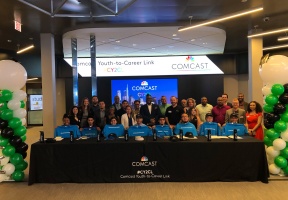
Comcast held a graduation ceremony for participants in “Youth-to-Career Link” (CY2CL), the company’s career readiness and job placement program for high school seniors.  During the graduation event at Studio Xfinity in Chicago on July 1st, a group of participants from Chicago’s Thomas Kelly High School received program completion certificates and signed “letters of intent” to ceremonially mark the potential beginning of their careers at Comcast.  Ten of the students have been recommended for sales and technical operations positions within the company. CY2CL is a high school pathway recruitment program offering eligible workforce-bound youth tools designed to help them pursue immediate career placement within Comcast. The program engages high school seniors who have an interest in taking a career exploration journey immediately following graduation.

Annual College Changes Everything® (CCE) Conference

Lawndale News Chicago's Bilingual Newspaper - Education

Lawndale News Chicago's Bilingual Newspaper - Education

College Changes Everything (CCE) will be hosting their annual conference bringing together education leaders and administrators, counselors, non-profit and community-based organizations, elected officials and other public sector leaders, students and other professional at Tinley Park from 8a.m., to 4:30p.m. to discuss best practices, and share ideas and resources to expand student success for each student. This year’s conference, themed Expanding Success for All Students—Every Community’s Responsibility, will include breakout sessions presented by state and national experts and practitioners on topics such as supporting low-income students who face food insecurity and housing instability; reducing remediation and accelerating college success. The preliminary agenda can be viewed at collegechangeseverything.org/2019Agenda. The CCE conference, which is expected to draw nearly 500 attendees, will be held at the Tinley Park Convention Center in Tinley Park, Illinois on July 18th. The registration fee is $40. To register or for more information, visit collegechangeseverything.org. Join the conversation on social media by using #CCE4me.

Child and Adult Care Food Program to Provide Meals at Child Care Centers and In-Home Day Care

Lawndale News Chicago's Bilingual Newspaper - Education

Lawndale News Chicago's Bilingual Newspaper - Education

The Illinois State Board of Education (ISBE) announced funding is now available for the Child and Adult Care Food Program (CACFP) in fiscal year 2020. The program assists child care centers, Head Start programs, before-and after-school programs, emergency shelters, and day care home providers with funding to serve healthy meals to children.  All participating child care centers must provide meals to enrolled children at no additional cost. Funding for the CACFP comes from the U.S. Department of Agriculture (USDA). Individuals in households who participate in Temporary Assistance for Needy Families (TANF) or the Supplemental Nutrition Assistance Program (SNAP) are automatically eligible to receive free meal benefits. Children enrolled in Head Start or Early Head Start programs at approved Head Start facilities and foster care children who are legal responsibilities of the state or court also receive free meal benefits. Parents or guardians should contact their child care center or day care home provider to find out if they participate in CACFP.

CTU responde a las propuestas de contrato del distrito

Lawndale News Chicago's Bilingual Newspaper - Education

Lawndale News Chicago's Bilingual Newspaper - Education

Por: Ashmar Mandou

La semana pasada, la alcaldesa Lori Lightfoot anunció que hizo una oferta de $ 300 millones al Sindicato de Maestros de Chicago que les daría a los maestros un aumento salarial del 14 por ciento en cinco años, sin embargo, el presidente de la CTU, Jesse Sharkey, publicó una declaración que calificó la oferta como “no lo suficientemente buena”.

“Al contrario de los comentarios de la alcaldesa Lightfoot a principios de esta semana, este es el primer movimiento de importancia que hicieron su oficina y el equipo de negociación de la alcaldesa Rahm Emanuel desde que la Unión presentó nuestras propuestas por primera vez hace seis meses. La presentación por la Junta de los aumentos salariales propuestos fue su primera propuesta económica. “Aún no hemos escuchado nada de ellos con respecto a la contratación de médicos, consejeros, trabajadores sociales, enfermeras y bibliotecarios, viviendas asequibles, tamaño de la clase o el aumento de servicios de trauma y apoyo integral para nuestras escuelas”, dijo el presidente de CTU, Jesse Sharkey.

Además del aumento salarial, CTU ha exigido más beneficios; bibliotecarios y enfermeras en cada escuela, más educación especial y apoyo bilingüe, clases reducidas y un consejero por cada 250 estudiantes. “CPS y el alcalde pueden pagar nuestras demandas de imparcialidad. Los aumentos de atención médica propuestos del 0,5 por ciento al año a partir de 2022 reducen el valor de sus propuestas en un 1,5 por ciento. En lugar de 14 por ciento en cinco años, resulta ser de 12.5 por ciento, o un aumento promedio de 2.5 por ciento por año. A esto se suma el aumento del 0,8 por ciento en la asistencia médica que impulsaron unilateralmente en enero, y su oferta salarial es aún más baja.

“La conclusión es esta: los votantes de Chicago afirmaron la visión de Lori Lightfoot. Esa visión abarcó la misma plataforma educativa que nuestro sindicato ha estado implementando durante la última década. Esa visión no se refleja en absoluto en estas propuestas.

“Los desarrolladores de Lincoln Yards han recibido cada centavo de los miles de millones que buscaron. El alcalde ya está planeando destinar más dinero para una academia de entrenamiento de la policía en el lado oeste. ¿Por qué la educación pública en esta ciudad, una profesión dominada por mujeres, se socava y no se respeta en forma sistemática? ¿Por qué no hay un programa de salarios o seguridad laboral para nuestros PSRP, muchas de las cuales son mujeres jefas de hogar de mujeres negras y morenas? ¿Por qué los niveles de personal clínico, trabajador social, enfermera y consejero están muy por debajo de los estándares nacionales? ¿Por qué estamos tirando libros a la basura en lugar de poner más bibliotecas y bibliotecarios en nuestras escuelas?

“Al mismo tiempo, la alcaldesa está hablando de aumentar los impuestos a la propiedad y” deformar “las pensiones, nos está cuestionando todo lo que hemos pedido en las negociaciones después de semanas de inactividad”.

HACIA, ComEd Graduate 17 estudiantes del programa de capacitación FEJA

Lawndale News Chicago's Bilingual Newspaper - Education

La Asociación Hispanoamericana de la Industria de la Construcción (HACIA) y ComEd graduaron a 17 estudiantes del Programa de capacitación para contratistas de la FEJA. El Programa de Capacitación de la Ley de Empleos de Energía Futuros de HACIA / ComEd (FEJA) es un programa gratuito de capacitación de desarrollo de 6 meses diseñado para propietarios o gerentes de pequeñas empresas de construcción que enseñan habilidades críticas de energía solar fotovoltaica y las mejores prácticas en la industria de la construcción. “Estamos extremadamente orgullosos de todos y cada uno de nuestros estudiantes que trabajaron arduamente, demostraron un gran crecimiento y se graduaron del Programa de capacitación para contratistas de la FEJA”, dijo Jorge Pérez, Director Ejecutivo de la Asociación Hispano Americana de la Industria de la Construcción. “Estamos orgullosos de asociarnos con ComEd para invertir en nuestras comunidades y nuestros trabajadores y para impulsar a Illinois a la economía del futuro”.

Los participantes del programa adquirieron una variedad de habilidades que los ayudarán a prepararse para el futuro de la industria energética, incluidos, entre otros, energía fotovoltaica básica, OSHA de 10 horas, renovación de EPA, certificación de reparación y pintura, preparación de examen LEED Green AP, lectura de planos , estimación, AutoCAD, y construcción verde. Al finalizar el programa, los participantes tuvieron la oportunidad de conectarse con profesionales de la competitiva industria de la energía solar fotovoltaica. “Quería aprender más sobre la construcción comercial, ya que tenía un historial residencial y, después de tomar este programa, pude comenzar a correr”, dijo Vanessa L. Rhodes de Twenty Eleven Construction. “Me asocié con otro estudiante en clase y formé una empresa conjunta. Terminamos ganando nuestro mayor contrato hasta la fecha con las Escuelas Públicas de Chicago, que fue muy emocionante “.

Lawndale News Chicago's Bilingual Newspaper - Education

Programa de alimentos para el cuidado de niños y adultos para proporcionar comidas en los centros de cuidado infantil y guarderías en el hogar

Lawndale News Chicago's Bilingual Newspaper - Education

Lawndale News Chicago's Bilingual Newspaper - Education

La Junta de Educación del Estado de Illinois (ISBE) anunció que los fondos ahora están disponibles para el Programa de Alimentos para el Cuidado de Niños y Adultos (CACFP) en el año fiscal 2020. El programa asiste a centros de cuidado infantil, programas Head Start, programas antes y después de la escuela, emergencia refugios y proveedores de servicios de guardería en el hogar con fondos para servir comidas saludables para niños. Todos los centros de cuidado infantil participantes deben proporcionar comidas a los niños inscritos sin costo adicional. El financiamiento para el CACFP proviene del Departamento de Agricultura de los Estados Unidos (USDA). Las personas en hogares que participan en Asistencia Temporal para Familias Necesitadas (TANF) o el Programa de Asistencia de Nutrición Suplementaria (SNAP) son automáticamente elegibles para recibir beneficios de comidas gratuitas. Los niños inscritos en los programas Head Start o Early Head Start en las instalaciones aprobadas de Head Start y los niños de cuidado de crianza que son responsabilidades legales del estado o la corte también reciben beneficios de comidas gratuitas. Los padres o tutores deben ponerse en contacto con su centro de cuidado infantil o proveedor de cuidado diurno en el hogar para averiguar si participan en CACFP.